
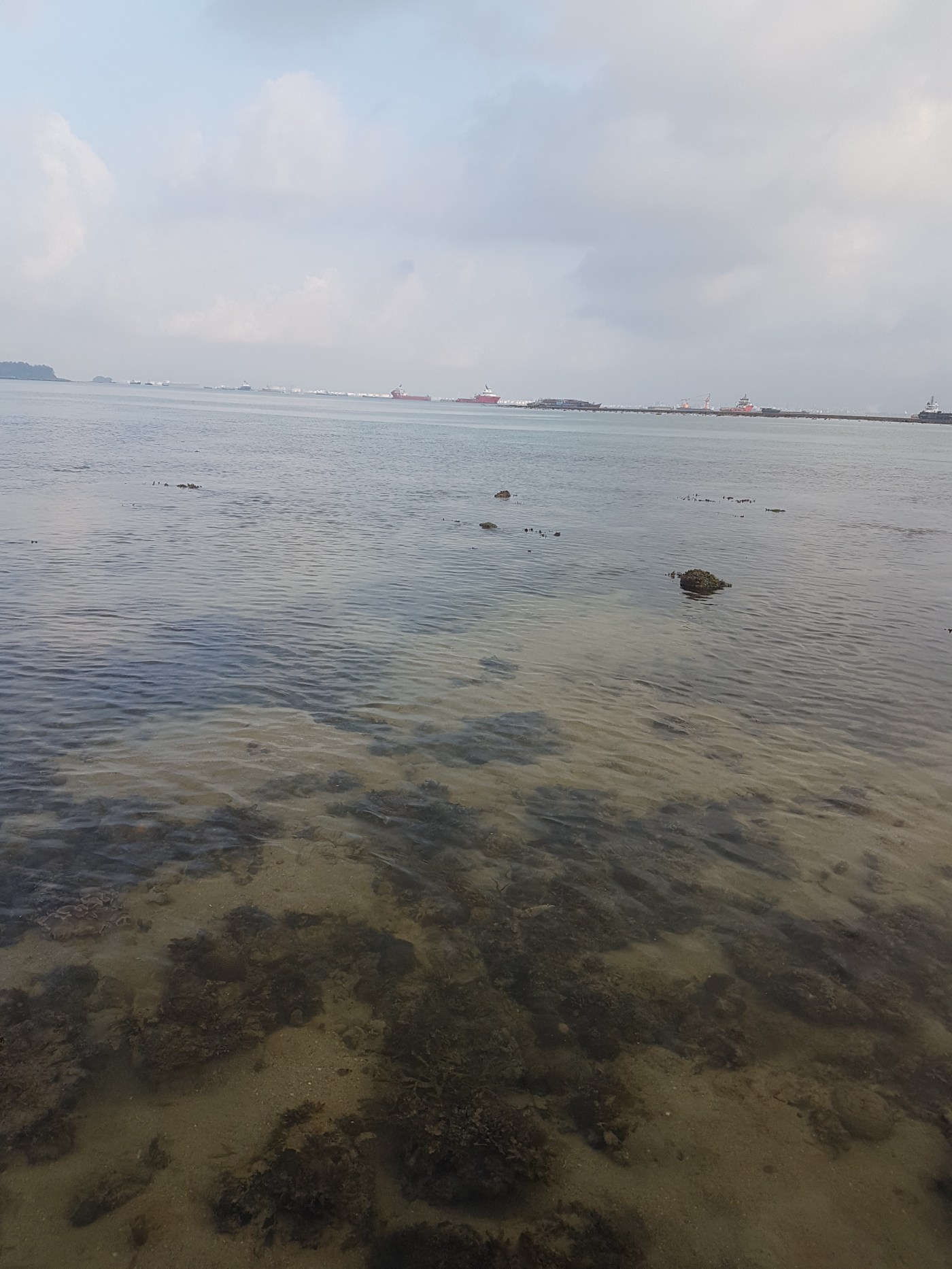


The intertidal zone is the area of a marine shoreline that is submerged at high tide but exposed at low tide and boasts a great biodiversity and wide range of wildlife, including:
- Marine plants such as seaweed and seagrass
- Soft and hard corals, anemones
- Small fishes
- Reef spiders
- Ribbon worms and flatworms
- Snails, clams, crabs and on occasion octopi and squids

The intertidal zone can be said to cycle between ‘2 shifts’ – high tide and low tide. The changes in tide at different times of the day greatly dictate the ecosystem of the intertidal zone, and results in the great variation in species that inhabit the intertidal zone: The incoming tide brings in oxygen, nutrients, and plankton, while the outgoing tide brings nutrients from the soil to wildlife further out to sea, flushes out waste and distributes reproductive gametes and seeds, thus providing extremely favourable conditions for animals to live in.
The intertidal zone is very attractive to sessile wildlife such as seaweed, marine plants and corals as firstly, the low water levels in the intertidal zone let for bright sunlight to easily reach wildlife on the seabed, allowing them to thrive with sufficient sunlight for photosynthesis. Secondly, the backwash from waves washes nutrients from land (plants such as mangrove trees and the soil) into the intertidal area, thus providing sessile, immobile organisms with a constant supply of nutrients to help them grow in bulk. The resulting abundance of wildlife on the seabed, in turn, attracts more mobile wildlife, such as fishes or molluscs, to live amongst these structures.
The balance of the intertidal ecosystem is a very delicate one, and is maintained by a combination of abiotic and biotic factors. In terms of the abiotic factors – factors arising from changes in the physical environment – the temperature and pH of the water, the amount of sunlight, the amount of nutrients in the environment and the presence of impurities or waste in the water, and in terms of the biotic factors – factors arising from living things in the ecosystem – the degree of predation and competition. Should any changes in the environment lead to a change in these factors, the balance of this ecosystem will then be disrupted, resulting in decreased livelihoods and survival of the flora and fauna within the intertidal community.
Sources:
 The Biodiversity Press
Leave a comment